SDL for Innovation: Learning in the FSU Innovation Hub
Intensive Innovation Events as Informal Learning Environments for Self-Directed Learning
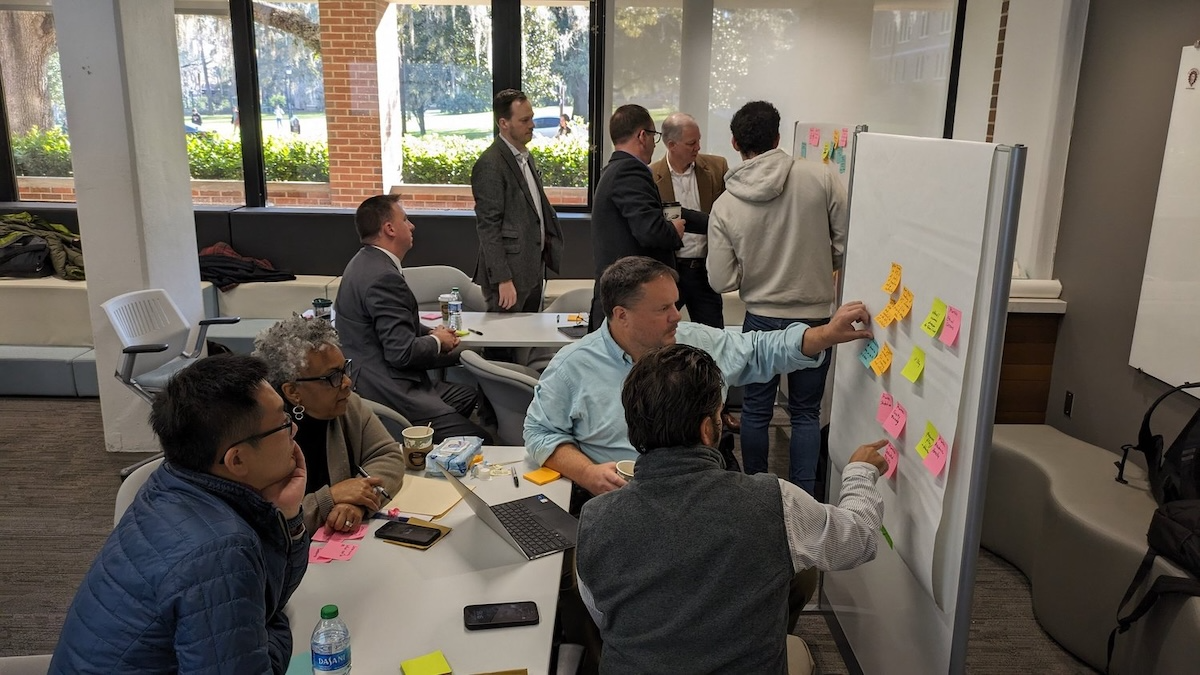
To understand how self-directed learning (SDL) operates within fast-paced, informal environments, our research inquiry investigates how learners tackle complex, undefined “wicked challenges” during intensive innovation events such as 24-hour design sprints hosted at the FSU Innoation Hub. Grounded in a six-step interpretation of Malcolm Knowles’ SDL definition, spanning initiative, needs assessment, goal setting, resource identification, strategy implementation, and progress evaluation, we are investigating participants’ SDL through post-event surveys, interviews, focus groups, activity logs, and artifact analysis.
Initial findings are showing behavioral patterns in problem-based environments. Although participants exhibit high initial curiosity and openness, they frequently struggle to diagnose their precise learning needs at the outset. Furthermore, when confronting problem-solving roadblocks under tight time constraints, participants demonstrate preference for human supports, prioritizing teammates and expert mentors over digital tools, static manuals, or generative AI, which seems to functions as a supplemental accelerator rather than a primary learning support.
As we continue to investigate in these areas, we expect insights to inform the design of informal learning environments and intensive events such as intensive innovation events. It seems likely that by actively scaffolding problem-scoping early in an event and prioritizing human-centric collaboration to cultivate the SDL capabilities required in a time of accelerating technological change.
Teachers’ SDL: International Research Partnership with North-West University, South Africa
Pre-Service Teachers’ Self-Directed Learning for Professional Development: The Role of Generative AI Tools
The teaching profession requires continuous, agile learning to navigate evolving curricula, emerging technologies, shifting societal expectations, and increasing classroom demands. These professional realities prompt educators to rely on self-directed learning (SDL) to continuously adapt and solve problems of practice.
As pre-service teachers train for induction into the profession through formal teacher preparation programs, the volume and pace of new information necessitates SDL. Although they may or may not recognize it, preparation programs offer safe spaces for exploring the new knowledge and practices of teaching; similarly, this season is an optimal time to improve their SDL processes as well.
Historically, teachers have navigated these challenges through established human networks, including mentors, peers, and professional learning communities, especially when addressing complex, core instructional problems. Online networks and digital tools then support more peripheral, background teaching tasks. However, in recent years, the rapid proliferation of generative artificial intelligence (GenAI) tools introduces the possibility of an on-demand, highly personalized form of just-in-time professional development that could disrupt established help-seeking patterns.
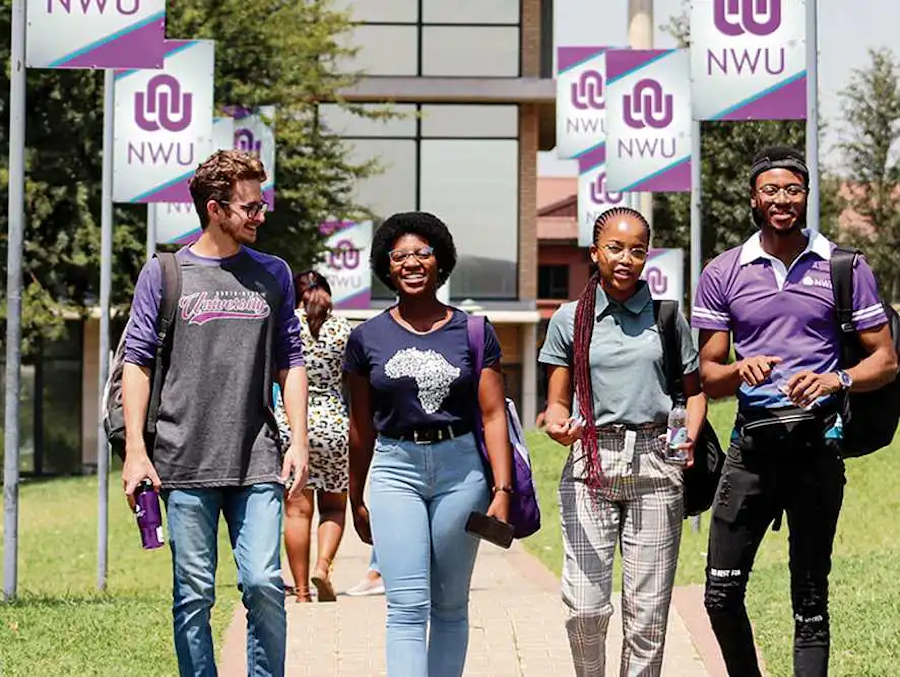
The purpose of this research project is to explore how pre-service teachers engage in self-directed learning (SDL) for professional development and the role generative AI tools play in this process. Specifically, we investigate the challenges, opportunities, and SDL processes for professional development of PSTs at two distinct career-preparation stages (new [1st-year] and internship-phase [4th-year]) and in two different national contexts (South Africa’s North West Province and the U.S. State of Florida). Specifically, we explore how PSTs perceive SDL, their SDL preparedness, what targeted training opportunities (e.g., design sprints, workshops) best support their professional growth, and during which stages (e.g., assessing needs, developing strategies) of the SDL process they turn to GenAI for support.
We frame this investigation in the tension between cognitive offloading and agency (i.e., the capacity to set goals, reflect, and act responsibly to effect change rather than being passively shaped). By situating the project in this tension, we can evaluate whether GenAI empowers PSTs as active agents or passive consumers of external tools. Furthermore, we are able to examine how GenAI potentially shifts the social dynamics of PSTs’ SDL processes as they transition from teacher preparation into active classroom internships.
SDL Analytics: Context-Aware SDL + AI Model Improvement Reagent (CASTmir)
CASTmir Ecosystem
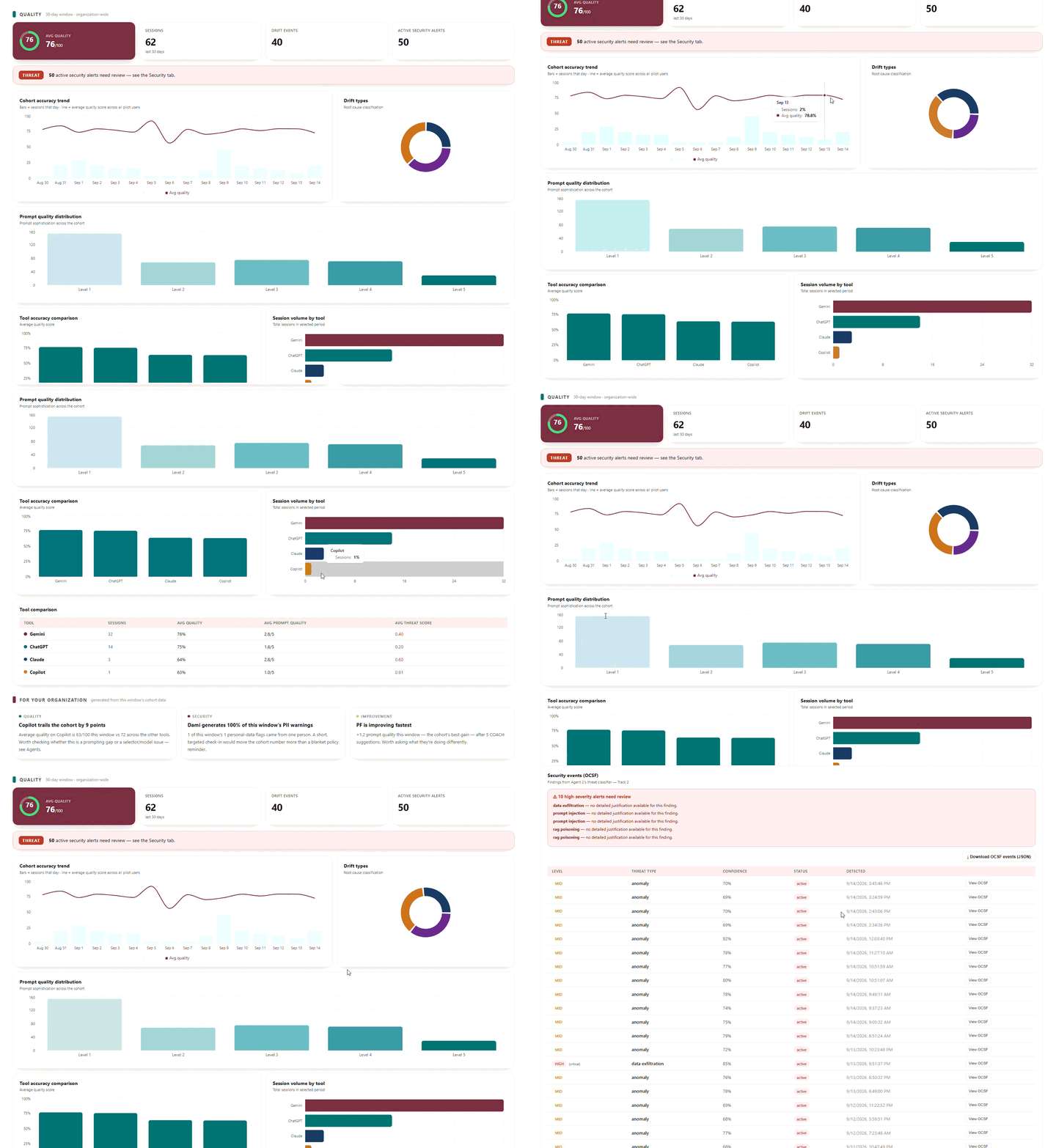
CASTmir monitors AI conversations in real time, delivering instant analytics, recommendations, and insights. This process relies on three core components that run entirely on the user’s local device, with data synced back to the system administrator for high-level overview insights.
CASTmir Doctor
Diagnoses prompt quality and security. Scores every AI exchange so you can see whether it was good and whether it was safe.
CASTmir Coach
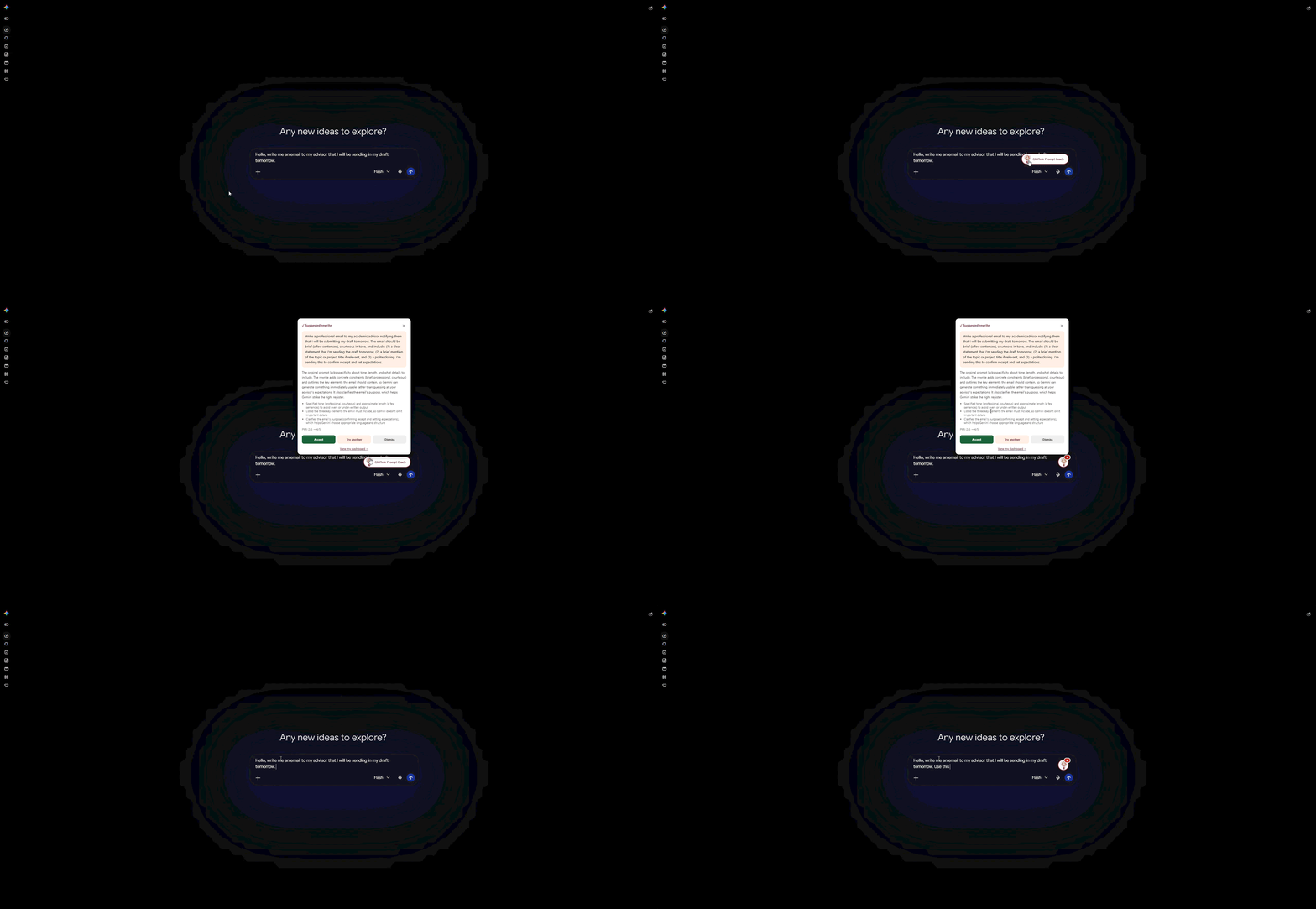
Provides real-time feedback on prompts. As you type, gives warnings about risky prompts and makes suggestions to improve.
CASTmir Guide
Monitors tool utilization company wide. Aggregates AI activity into a dashboard to show trends in usage, quality, security, and improvement.